




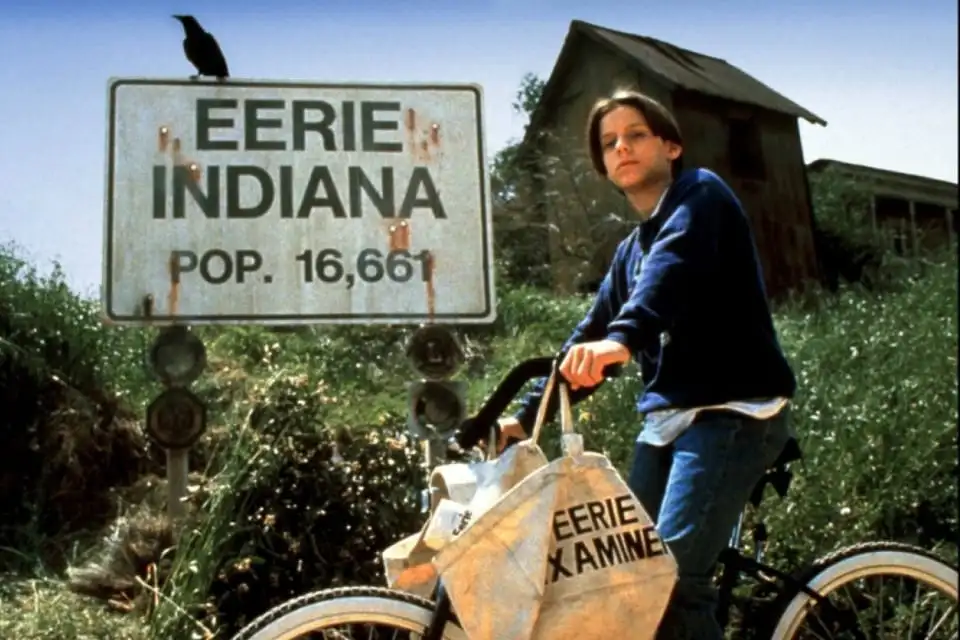
Year: 1991 / Created by: Jose Rivera, Karl Schaefer / Cast: Omri Katz, Justin Shenkarow
For cinephiles of television, Eerie, Indiana occupies a special, almost secret place. It wasn’t loud, glossy, or aggressively funny. Instead, it worked through atmosphere, implication, and the kind of unease that settles slowly rather than shocks.
Set in a seemingly perfect Midwestern town where nothing was quite right, the series filtered classic genre ideas — science fiction, horror, and surreal comedy — through a child’s perspective. Episodes unfolded like modern campfire stories: restrained, curious, and slightly off-balance. The supernatural elements were rarely spectacular; they were domestic, mundane, and therefore more disturbing. A forever-young family. A living Elvis sighting. A town that refused to age.
What made Eerie, Indiana special was its trust in tone. It never explained too much, never winked at its audience. It understood that mystery works best when it’s incomplete. The show respected young viewers by refusing to simplify fear or wonder.
Visually modest but conceptually sharp, the series anticipated later genre television that blended childhood, nostalgia, and dread. Its short lifespan only deepened its cult status, turning it into a half-remembered dream rather than a finished statement.
Eerie, Indiana endures because it treated childhood not as innocence, but as intuition — the ability to sense when something isn’t right, even if you can’t yet explain why.
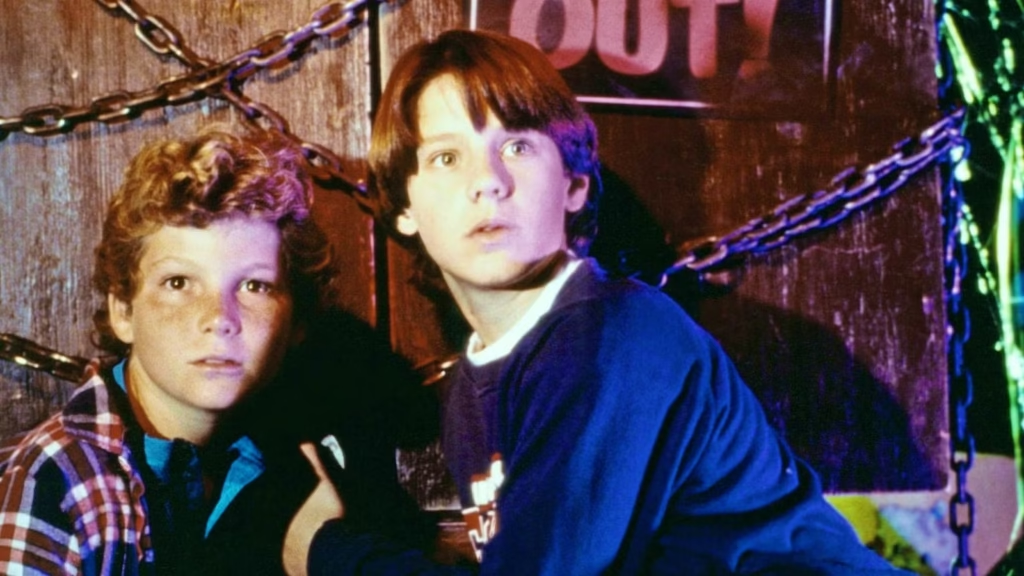
Simon Holmes (left, played by Justin Shenkarow) and Marshall Teller (right, played by Omri Katz)