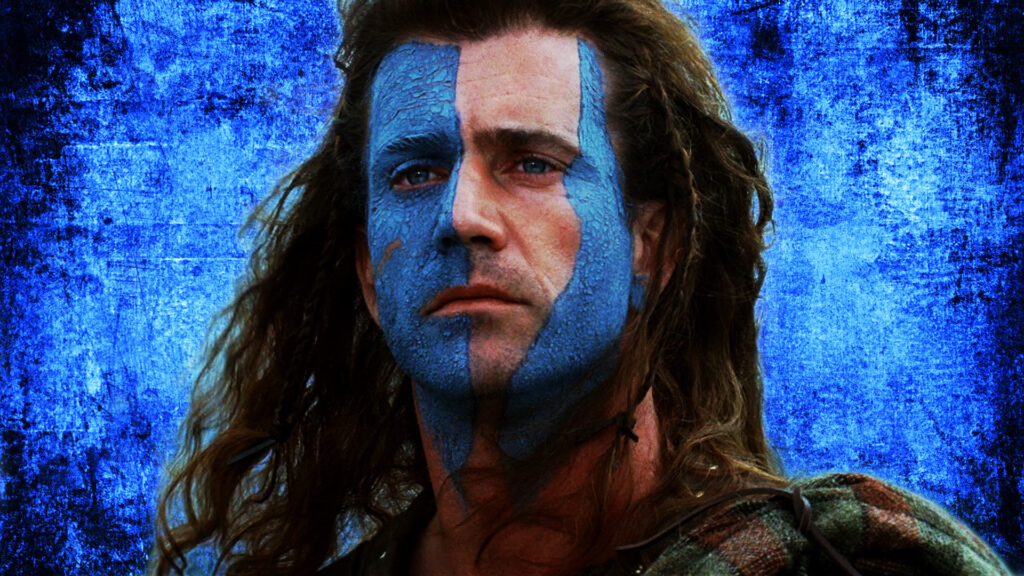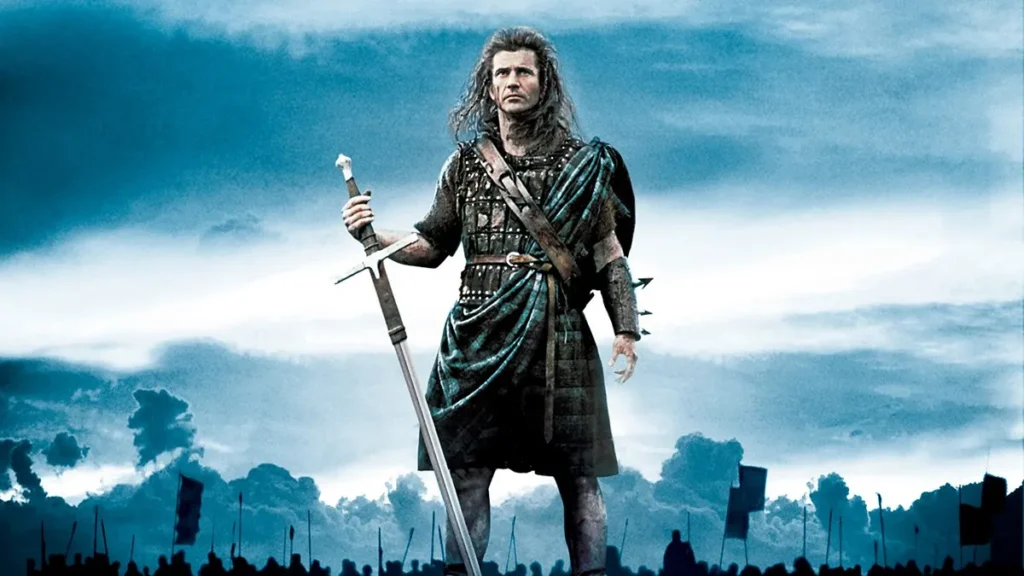


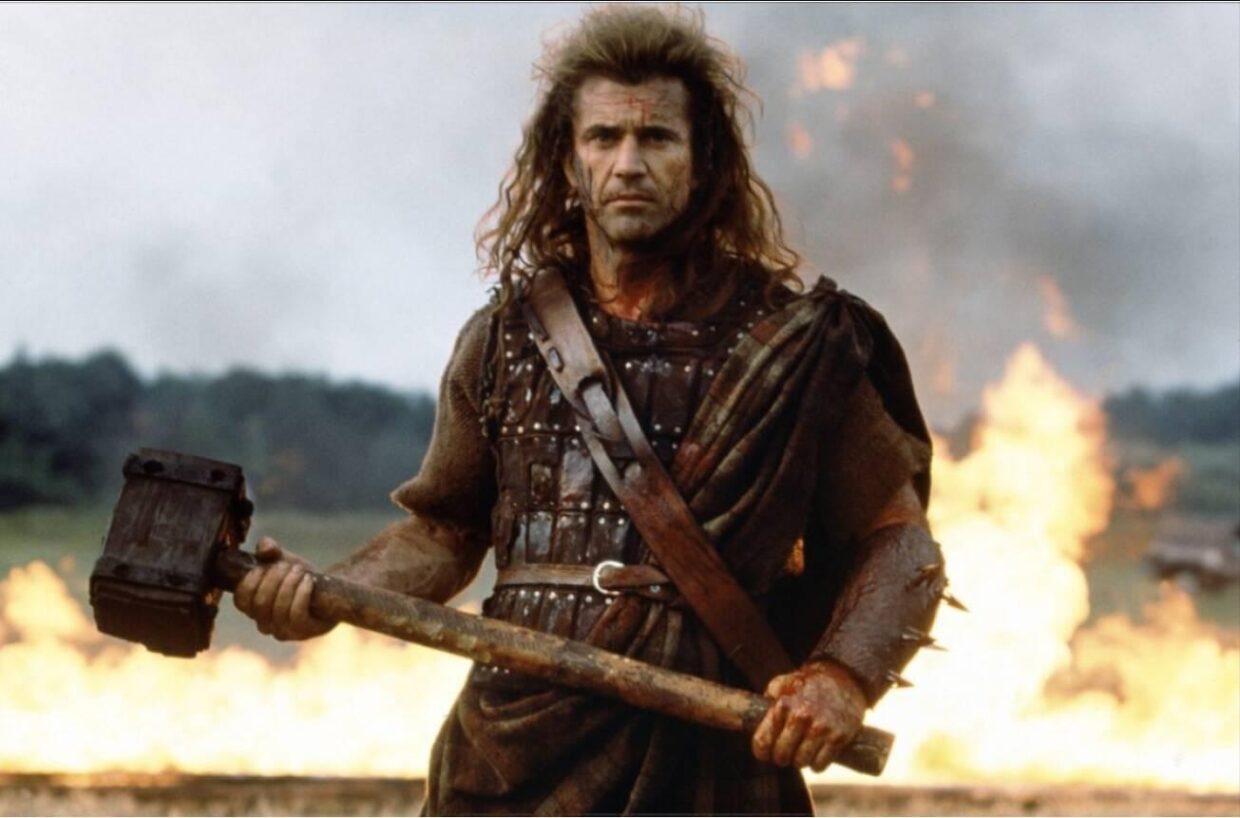
Year: 1995 / Directed by: Mel Gibson / Cast: Mel Gibson, Sophie Marceau, James Cosmo, Brian Cox, Catherine McCormack, Brendan Gleeson
For cinephiles, Braveheart is less about historical accuracy and more about cinematic conviction. It belongs to a rare category of films that commit fully to their emotional register — without irony, without distance, without apology.
What makes Braveheart endure is its seriousness. The film takes its time, allowing landscapes to breathe and silences to linger. Shots of rolling hills aren’t just scenic; they establish scale, loneliness, and inevitability. The camera frequently observes rather than decorates, grounding the story in physical space and human fragility. This is epic filmmaking that understands restraint.
Mel Gibson’s direction favors texture over polish. Battles are chaotic and exhausting, edited to feel disorienting rather than triumphant. Mud, rain, and blood carry weight. Violence is never elegant, and victory never feels clean. That physicality gives the film its moral gravity.
Equally important is the score, which works not as emotional manipulation but as memory — recurring themes that echo loss long after the scene has passed. Music and silence are allowed to coexist, creating a rhythm that modern blockbusters often fear.
Above all, Braveheart believes in emotion. It believes audiences can handle sincerity. In an era increasingly dominated by self-awareness and spectacle, its earnestness feels almost radical.
Flawed, exaggerated, and mythologized — yes. But Braveheart understands something essential about cinema: when a film dares to feel deeply, audiences will follow. That is why it still matters.