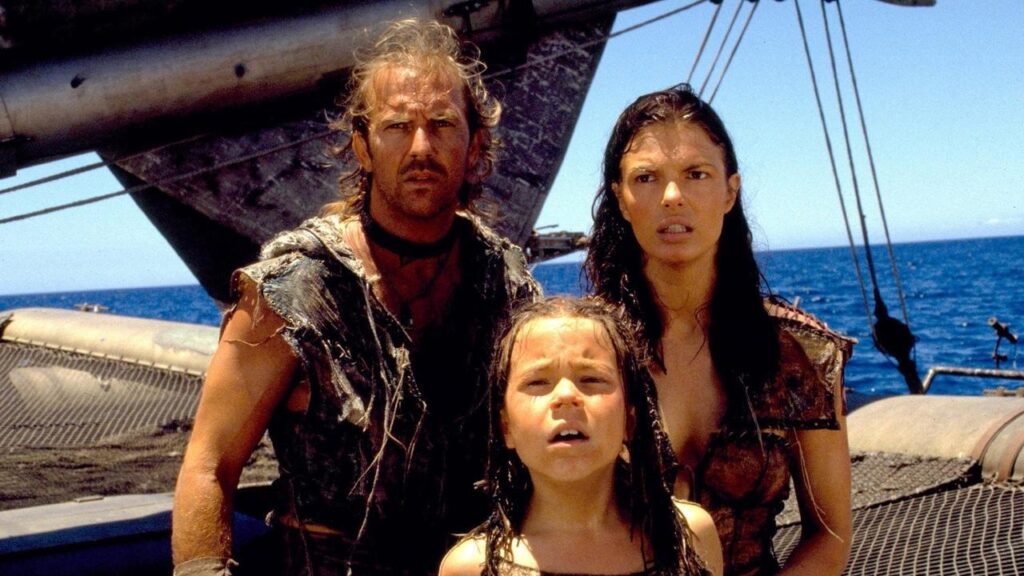





Year: 1995 / Directed by: Kevin Reynolds / Cast: Kevin Costner, Dennis Hopper, Jeanne Tripplehorn
Waterworld carried the burden of its own legend. Marketed immediately as an expensive gamble and mocked before it could be judged, the film became shorthand for Hollywood excess. But beneath the headlines and inflated budget lay something more sincere — and more interesting.
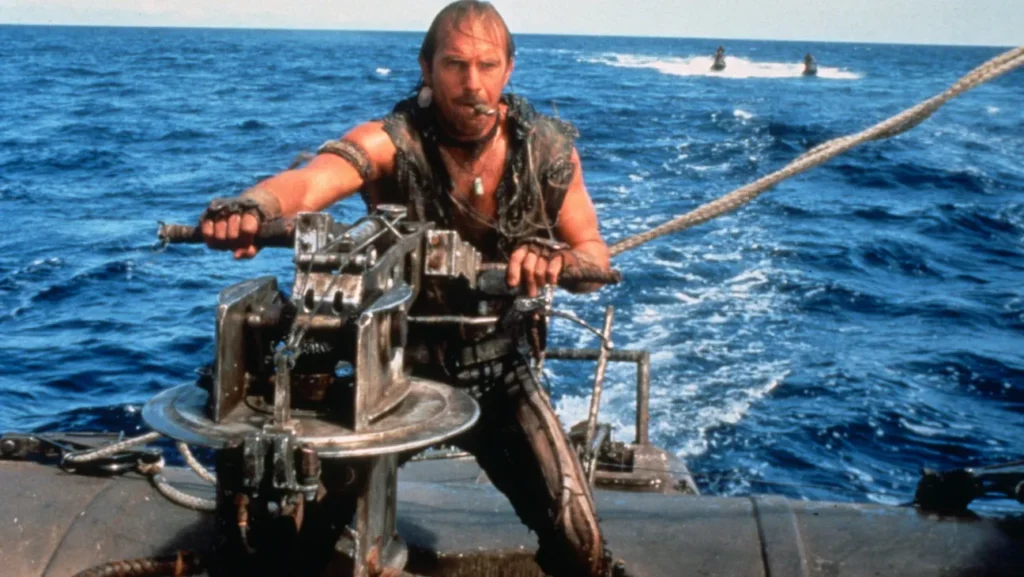
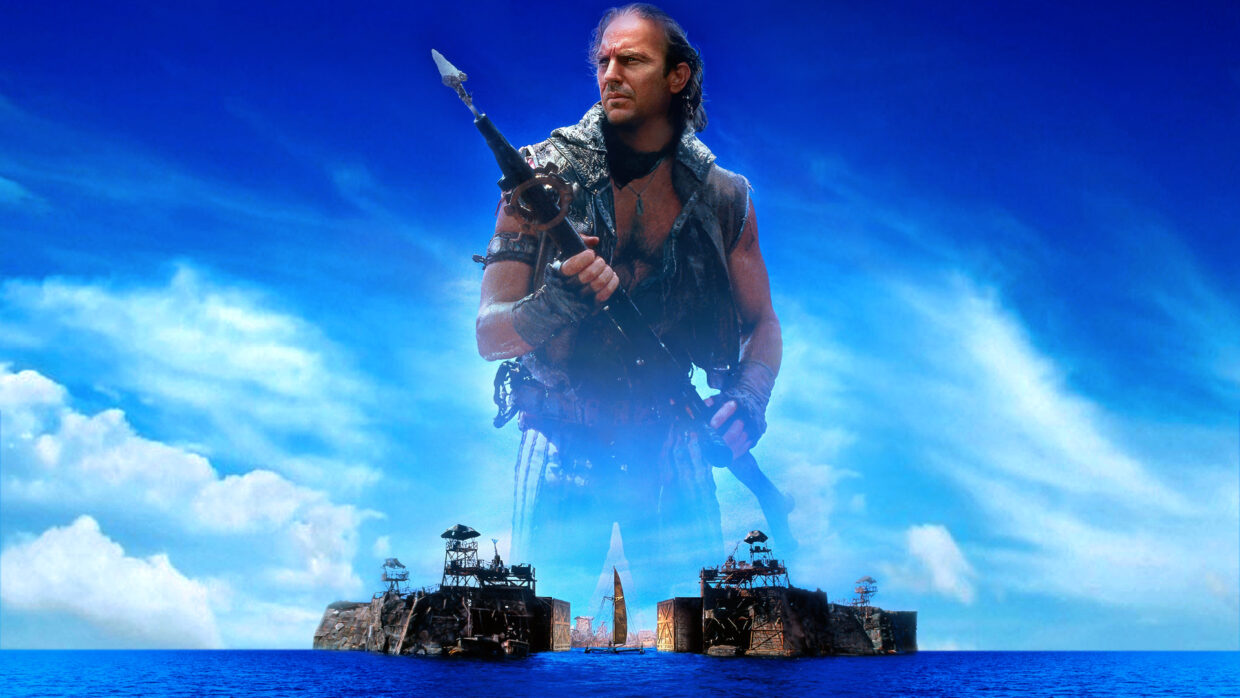
Set in a future where the polar ice caps have melted and land has vanished, Waterworld imagines civilization reduced to floating scraps, barter economies, and myth. Kevin Costner’s Mariner is a reluctant hero in the purest sense: taciturn, morally guarded, and emotionally adrift. He isn’t driven by destiny or idealism, but by survival — a choice that gives the film its somber tone.
What distinguishes Waterworld is its commitment to scale. This is blockbuster filmmaking that insists on being physical. Sets were built, destroyed, and rebuilt at sea. Stunts feel dangerous because they were. The ocean isn’t a backdrop; it’s an ever-present threat, swallowing certainty and control.
Critics at the time dismissed the film as overblown, but its seriousness was part of the problem — and its strength. Waterworld never winks at the audience. It believes in its world completely, even when that belief strains credibility.
Revisited today, the film feels less like a failure and more like a cautionary artifact of ambition. Messy, uneven, and undeniably bold, Waterworld stands as a reminder of a moment when studios still dared to bet everything on a single, original vision — and let it sink or swim on its own terms.